Drones may reduce delays on Waterloo line


A drone is now operating at London Waterloo to tackle trespass, fix infrastructure faults and reduce disruption
Operated remotely from Southampton, the drone provides live intelligence to South Western Railway and Network Rail Wessex for rapid response to incidents.
Trespass and fatalities account for almost 14 per cent of delays, making them a leading cause of disruption and costing taxpayers millions.
Automated drone technology is part of publicly owned South Western Railway and Network Rail Wessex’s plan to improve services for customers ahead of the establishment of Great British Railways
RAILWAY customers at London Waterloo may have spotted a new presence overhead: a drone helping to prevent delays at Britain’s biggest station.
South Western Railway (SWR) and Network Rail Wessex (NR Wessex) are deploying automated drone technology to deter and tackle trespass, improve safety and reduce disruption on one of the country’s busiest rail corridors.
Trespassing on the railway is illegal and extremely dangerous. SWR and NR Wessex trains are powered by an ‘always on’ electric third rail carrying 750 volts of direct current, which can cause severe, lifechanging injuries or death.
When trespass is reported on the railway, SWR and NR Wessex must turn off the power, preventing trains from running until the incident has been resolved and power to the lines can be safely restored.
Most of South Western’s 1,600 daily services begin or end at London Waterloo. Even minor incidents can delay thousands of customers and cost taxpayers millions.
Between April 2025 and June 2026, trespass and fatalities caused almost 14 per cent of cancellations and over 200,000 minutes of delay to SWR and NR Wessex services, making it one of the leading causes of disruption.
Last September, a trespasser near Clapham Junction caused more than 57 hours of delays and was later imprisoned for eight weeks.
Another even more serious incident in the New Malden area in August 2024 saw the equivalent of nine days of delays, costing the taxpayer £1.2 million. The trespasser was sentenced to 18 months in prison.
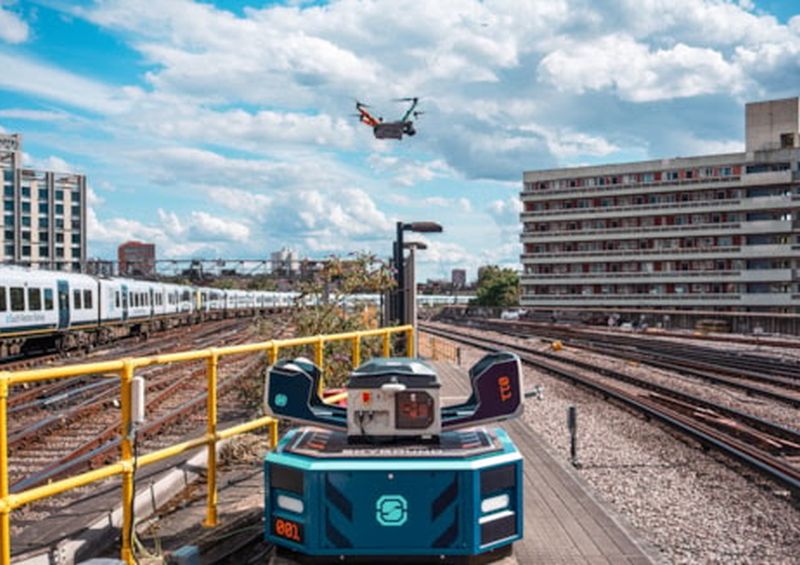
The drone is operated remotely by British firm SkyBound from a high-tech control centre almost 80 miles away in Woolston, in the Southampton area.
When required, operators launch the drone from its trackside station to provide rapid intelligence for SWR and NR Wessex’s control centre, security and engineering teams, even before teams arrive on the ground.
Its high-resolution and thermal imaging cameras give enhanced visibility of trespass incidents, infrastructure concerns or any situation that requires inspection, with live footage streamed directly to the network’s operations centre in Basingstoke.
This allows the railway and emergency services to respond more quickly, reduces the need for ground teams to access the track, and limits the need to switch off the power and delays customer journeys.
The drone at Waterloo is just the first of a planned chain of SkyBound drones to help protect the busiest section of the SWR and NR Wessex network, with further drones to be based at Clapham Junction, New Malden and Walton-on-Thames.
South Western Railways
.
.
.
.