

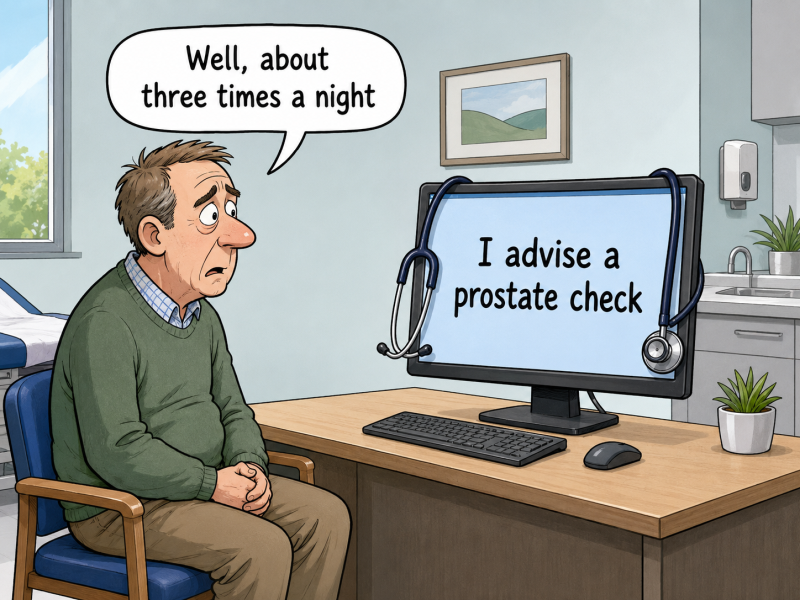
NHS in Surrey prescribe AI solutions to diagnoses


Surrey NHS trusts are investing tens of thousands of pounds into artificial intelligence tools across clinical and administrative settings, the Local Democracy Reporting Service (LDRS) can reveal.
AI is being deployed across some of Surrey’s largest health trusts amid a worldwide scramble to harness the burgeoning new tech.
Freedom of Information responses to the LDRS have shown that AI-backed diagnostic tools, transcription softwares and phone systems are in use at hospitals across the county.
Chief Clinical Information Officer Dr Andrew Carne from Royal Surrey and Ashford and St Peter’s Hospitals NHS Foundation Trusts – which are among the trusts rolling out AI – told the LDRS: “We are proud to be at the forefront of implementing AI to benefit our patients, supporting our clinicians in the diagnosis of serious medical conditions such as cancer.”
Among the tools used at Royal Surrey County Hospital is Annalise AI, a diagnostic software designed to help with analysis of chest X-rays. The trust is spending £21,120 per year on this technology, which has passed a “robust” evaluation process.
The trust has credited this tool with helping speed up lung cancer diagnoses, giving clinicians the chance to catch more cases as early as possible. It is used across several trusts that are part of the Surrey, Sussex and Frimley Imaging Network.
“These tools are designed to enhance, not replace, the expertise of our clinicians and are rigorously tested before being introduced into clinical practice,” Dr Carne explained.
“The use of AI in any of our processes is subject to robust internal governance and oversight and is implemented in accordance with NHS England guidance and processes.”
An evaluation at Royal Surrey is also ongoing for the use of OlySense, an AI tool engineered to help with gastrointestinal examinations. The trust has so far spent £93,432.96 for two OlySense.
Supplied by healthcare tech company Olympus Medical, it is intended to assist with polyp detection during colonoscopies.
But the use of AI in healthcare goes beyond clinical settings, with trusts across Surrey also using the technology for administrative purposes.
Surrey and Borders Partnership NHS Foundation Trust – the county’s main mental health provider – spends an estimated £65,000 per year on Limbic AI Chat Bot, which is designed to assist with the patient referral process.
A spokesperson for the trust said: “Like other NHS organisations, we are exploring the use of AI as part of the NHS’s ’digital first’ policy. We are not using any patient-facing AI at the moment, but we expect to in the coming months.
“Before deploying any new AI or other technology, we will have strong governance in place and be aligned with all national guidelines.”
Several trusts also use less medically-specific AI tools, such as Microsoft CoPilot – which was found to be used in all trusts that responded to the LDRS’ FOI requests.
Surrey and Sussex Healthcare NHS Trust said it is using CoPilot for “clinical uses including meeting summarisation, document preparation” in its FOI response – with a pilot beginning in September 2025 and evaluation still ongoing.
Dr Deblina Bhattacharjee of the University of Bath’s computer science department told the LDRS that the use of AI in healthcare comes with a balance of pros and cons, with the easing of administrative tasks being the “obvious one”.
Assistance in diagnostics, such as the software used across the Surrey, Sussex and Frimley Imaging Network, is also another crucial area where AI use “has its positives”, Dr Bhattacharjee added.
However, she said that “the risks come from pace outrunning governance”, adding: “Clinical AI should remain a support for human decision making, with clear accountability in place before deployment rather than after.”
Surrey NHS Trusts approached by the LDRS insisted that stringent evaluation criteria are in place before any AI technology is rolled out.
“From my own experience, the projects that succeed are the ones where clinicians, patients and information governance teams are involved together,” Dr Bhattacharjee said.
James Moules Local Democracy Reporter