Epsom and Ewell Times

Current
ISSN 2753-2771

Green-belters belted up and beltless

Epsom and Ewell Borough Council’s (EEBC) Licensing and Planning Policy Committee voted unanimously yesterday (30 January) to publish its Draft Local Plan for public consultation, after the chairman rebuffed claims that councillors had not been given enough time to read it. The decision followed public opposition to suggestions of Green Belt development in the borough, including a petition with over 2,000 signatures.

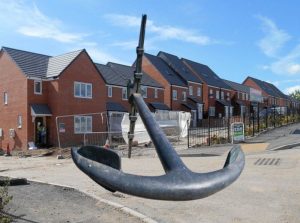
Image – Google – Horton Farm, Epsom in Green Belt, that could get 1500 houses.

The meeting opened with questions from the public. The chair, Councillor Steven McCormick (RA – Woodote Ward) told the committee that members of the public could not ask questions directly related to the meeting’s agenda items. This is in the Council’s Standing Orders. Steve Gebbett, who has been campaigning to protect the borough’s Green Belt, said: “My belt’s a bit too tight. I hope you don’t mind me taking off my green belt.” In a symbolic gesture, he placed a green belt on a table, where it remained for the remainder of the meeting.

He asked: “Does the committee ever refer significant issues that affect the whole borough to the whole council?” Mr Gebbett then described a situation in which “councillors go home and tell their loved ones their legacy is: honey, I shrunk the greenbelt”.

Councillor Julie Morris (Liberal Democrats, College Ward) asked the committee: “Am I the only person who hasn’t seen this document before? Have you all been discussing it for a long time? The assembled public might think we’ve been cooking it up for months. But we haven’t.” Councillor McCormick told her that they’d tried “to be open and transparent with the whole process.” He added that there had been many member briefings throughout the summer and autumn, and several statements to full council with opportunities to ask questions.

He also said that the Draft Local Plan had been presented to all members to be discussed in December, and said to Councillor Morris: “Maybe you missed some of those meetings?” Councillor McCormick added: “It’s strange to disperse the idea that it has happened behind closed doors. I’m quite disappointed Councillor Morris, I’m afraid.” Councillor Morris said that she meant that she had not seen the whole document together previously.

Councillor McCormick responded: “The items were presented on 7 December to all members. You’ve had ample opportunity to come forward to seek clarification.” Councillor Neil Dallen (Residents’ Association, Town Ward) said he had “sympathy” with Julie Morris’ comments, adding: “This is the first time we’ve seen the 200-page document. Most of it we have covered in different places at different times. I can’t say there’s parts I wasn’t aware of. I still think there’s bits missing.”

The Draft Local Plan sets out planning policies and sites that may be developed in the Borough up until 2040. It includes nine sites for potential development, on which it proposes that a significant proportion of its housing requirement will be built.

Four of these sites are in the town centre, on previously developed – ‘brownfield’ – land. However, the Council has said that they would be unable to meet housing requirements within urban areas alone. The Draft Local Plan states: “Whilst these sustainable locations are our preferred locations for new development, they do not deliver adequate housing to meet our social responsibilities for providing housing, in particular affordable housing.” Therefore, the other sites put forward for development are located outside of the town centre and on Green Belt land.

Green Belt land includes areas of countryside that are protected from development in order to prevent urban sprawl and encourage development within existing built-up areas. National planning policy requires that Green Belt boundaries are only amended “in exceptional circumstances”.

In the Draft Local Plan, the council says that it “considers that the scale of unmet development / housing needs in the borough that would result from pursuing a brownfield only approach provides the exceptional circumstances and justification to make changes to the Green Belt boundaries in the borough.”

The Draft Plan also states that: “Through the release of less than 3.6% of the borough’s Green Belt, the council will be able to deliver an additional 2,175 dwellings over the plan period”.

Under the proposals, sites removed from the Green Belt for development would include:

  • Land at West Park Hospital (for 150 homes)
  • Horton Farm (for 1,500 homes)
  • Land at Chantilly Way (for 25 homes)
  • Land Adjoining Ewell East Station (for 350 homes)
  • Hook Road Arena (for 150 homes)

The National Planning Policy Framework (NPFF), which the Local Plan should generally adhere to, is undergoing consultation, including on a revision that states that: “Green Belt boundaries are not required to be reviewed and altered if this would be the only means of meeting the objectively assessed need for housing over the plan period”.

Chris Grayling MP

Mr Chris Grayling, MP for Epsom and Ewell, told the Epsom and Ewell Times: “The Borough’s proposal to simply build houses on 135 acres of green belt land, and not make any attempt to pursue the redevelopment of Kiln Lane and Longmead as a way of strengthening both the Borough’s economic future and meeting its housing need is a failure of momentous proportions.”

Mr Grayling has put forward his own proposals for development [reported in the Epsom and Ewell Times] on the Kiln Lane and Longmead estates. He told the Epsom and Ewell Times: “The kind of development that I proposed is happening elsewhere, but the Council thinks it is too difficult to do here. I think that is a cop out, and the result will be a massive loss of our green spaces in the area and real damage to biodiversity. It’s always easier just to build on a green field. But easy does not mean best.”

The Draft Local Plan, in reference to residential development on the Kiln Lane and Longmead estates, states that: “longer term opportunities for intensification for mixed use could be explored in time”.

The Council has said: “The Local Plan needs to protect our attractive and valued environment whilst reconciling the need to accommodate our development needs. The balance between protecting our environment and enabling development and supporting infrastructure, is at the centre of our spatial strategy.”

The borough’s housing need was calculated using the “standard method” in national planning guidance. The need was calculated as 576 dwellings per annum, equating to 10,368 dwellings over the Local Plan period. The Draft Local Plan, however, states: “Taking into account the borough’s constraints, the council is not planning on meeting its local housing need figure.” Instead, it has set a housing requirement of 5,400 dwellings over the Local Plan period.

Under another proposed addition, the NPFF will strengthen its existing point that local housing need is an advisory starting point for setting a local housing requirement. In an email on behalf of CPRE, (The Council for the Protection of Rural England), Surrey, to the Licensing and Planning Policy Committee, Mr Tim Murphy said that there was “no justification” for increasing the number of homes in the borough by 5,400. He said that the standard method used to calculate housing need “relies on household projections from 2014 which are now widely recognised as significantly inflating household growth in areas such as ours”.

The Council’s Planning Policy Manager told the committee that there is “already an existing need in the borough” and that as of June 2022, there were 1,200 households on the list for affordable housing. He added: “We have a significant need for affordable housing in the borough, including for homelessness and people in temporary accommodation.”

However, the committee rejected a motion, proposed by Cllr Kate Chinn (Court Ward, Labour), to ensure that 40% of all new developments exceeding 10 units included affordable housing.

Councillors also raised questions in the meeting as to whether the Draft Local Plan could be altered following the public consultation. Councillor Morris asked whether, if a large number of people came forward to oppose Green Belt development, this would form part of the “evidence base” required for Local Plan policies.

The Council’s Interim Director of Environment, Housing and Regeneration, responded: “It is the content of responses, and what new evidence and information they direct us towards, not about the number of responses received, or the number of times something is said.” She said that the council would be required to provide a statement on the consultation, with key issues that were raised, and how they were addressed with changes to the Plan.

Councillor Morris said: “We’ve taken an awfully time to get this far; I’d hate to see it abandoned. So much of the document is really really important. There are bits that are just not right. If I were to support it, it would not be that I support the content, but the concept of it going forward to public consultation.” She added: “Green Belt has become massively important. […] Keeping hold of what we’ve got has become the name of the game recently.”

Councillor Dallen added: “Can I request that we don’t have 200 pages to go through in one night in future?” Councillor McCormick responded: “It’s noted. We’ll try to do better next time.”

Just before the vote, Councillor Morris said: “I am somewhat reassured that there can be significant change if this document goes ahead. I expected to want to vote against. I felt we hadn’t given it enough thought and time.” She added: “This is clearly controversial. A lot of people are not happy about this.”

After almost two hours, councillors voted unanimously to go ahead with the Draft Local Plan. Public consultation will commence today at noon and conclude on 15 March. Go to Epsom and Ewell Times Official Notices page to see how you can respond.

After the meeting Cllr Steven McCormick, Chair of the Licensing and Planning Policy Committee, said: “We believe the Draft Plan provides a proactive framework for the borough to grow in a strong and positive way, so everyone will have the opportunity to live in an affordable, vibrant area with a growing economy. “The Draft Local Plan is our starting point and we strongly encourage local people to help shape the final Plan by responding to the consultation.”

[Ed: Even if the Green Belt proposals are removed after public consultation this Draft will still be of value in Planning Appeals pursued by Green Belt developers in the future].

Related reports:

Local Plan battle heating up?

Green-belters seeing red on Local Plan?

Lessons for Epsom in Mole Valley’s “shouty” Local Plan struggle?

Crucial month for local Local Plans?

Gove gives pause for thought on Local Plans?

Local Plan Battle: early skirmishes on Downs Farm

MP’s housing solution for Epsom and Ewell


Local Plan battle heating up?

A draft Local Plan, that will delineate Epsom and Ewell Borough‘s planning framework for decisions on planning applications and development for the years ahead, has been published on the Council’s website. Out of 5,400 new homes proposed in the Draft Local Plan (2023-20240), some 2,175 homes (almost 41%) are earmarked to be built on the borough’s Green Belt land. EEBC councillors are due to take a final Section 18 publication decision on 30 January,

Of nine “Preferred Option” development sites proposed, five are Green Belt – with Downs Farm, where 650 homes were proposed, only narrowly missing the cut after a campaign by residents. Over 55 hectares – or some 137 acres – of Green Belt land could be sacrificed. The plans include one gigantic estate of some 1,500 homes on land around Horton Farm, which will have its Green Belt status stripped away.
The “Preferred Options” for Green Belt development are:

  • 150 homes around West Park Hospital
  • 1,500 homes around Horton Farm
  • 25 homes next to Chantilly Way
  • 350 homes on the sports fields by Ewell East Station
  • 150 homes on sports pitches at Hook Road Arena (land owned by the Council)

A spokesperson for a local campaign group seeking to protect green belt land has responded: “Given the Government’s “brownfield first” brief, it looks like the planners did not get the memo. They certainly did not get the new memo from Government saying that it is not necessary to review Green Belt for housing. And they appear not to have taken the hint from neighbouring Elmbridge, who creatively avoided any Green Belt destruction, and Mole Valley, whose councillors this month voted unanimously to remove all Green Belt sites from its Local Plan.”

Only on its own land can the Council specify 100% affordable homes – the rest will be about 40% , as developers have many canny ways to get round this stipulation and build more profitable higher end housing. The Plan is offering just around 1,000 homes in Epsom Town Centre until year 2040, with a similar number only on other brownfield spaces, plus also around 1,000 for planning permissions in the Borough already in the pipeline “

Appendix 4 of the draft Local Plan reveal other Green Belt sites that have been offered up by developers in a “ Call for Sites.”

Yufan Si, campaign leader for Keep Epsom & Ewell’s Green Belt stated: “So where is the real challenge taken up, to redevelop Epsom Town surroundings, which most commentators agree could do with some rejuvenation? The Kiln Lane and Longmead industrial areas are said to be off limits, according to consultants for EEBC, because of the 1,800 jobs there. So not a single new brownfield affordable home is put forward here, with no imaginative plan to mix housing with job creation and revitalise an area close to the station, shops and entertainment facilities that many people prefer.”

“We are left with the conclusion that the planners – and by extension our ruling Councillors – are in a “Call for Sites” trap. This has inhibited visionary thinking and pro-active engagement with urban developers on how much-needed affordable housing might be built in tandem with an exciting redevelopment programme that Epsom’s brownfield areas so desperately need. All they seem able to do about it is to bulldozer yet another field of our Green Belt heritage” said Ms Si.

If Councillors vote at the special meeting of the Licensing, Planning and Policy Committee on January 30 for the Draft Local Plan (Section 18) to proceed, then it will be formally published by EEBC on February 1, followed by a six-week Public Consultation stage.

Related reports:

Green-belters seeing red on Local Plan?

Lessons for Epsom in Mole Valley’s “shouty” Local Plan struggle?

Crucial month for local Local Plans?

Gove gives pause for thought on Local Plans?

Local Plan Battle: early skirmishes on Downs Farm

MP’s housing solution for Epsom and Ewell


Green-belters seeing red on Local Plan?

A determined group of Epsom & Ewell residents, representing over 1,700 petitioners , took to the podium at last night’s meeting of the Council’s Licensing, Planning and Policy Committee (January 19th). They asked Councillors eleven questions about the threat of Green Belt sites being included as “Preferred Options” in the imminent Draft Local Plan.

[Official Council record: The Chair (Cllr Steven McCormick – RA Woodcote Ward)provided an oral response to each question. Eight supplementary oral questions were asked. The Chair, the Interim Director of Environment, Housing and Regeneration, and the Planning Policy Manager provided oral responses to seven of the supplementary questions. The Chair confirmed a written reply would be provided for one of the supplementary questions.]

Otherwise the business of the meeting was confined to approving increases between 6 and 10 % for 2023/2024 on a range of Council charges relating to Planning matters, private hire vehicle licensing, animals and scrap metal.

Given every indication that the Government no longer thinks Green Belt reviews are necessary with housing targets advisory only, and fresh from Mole Valley District Coucil’s unanimous vote to remove Green Belt sites from its Local Plan, residents challenged the councillors and planners to seize the opportunity to save the Green Belt now and focus on brownfield sites for new affordable homes. 

In answer to one question about whether planners had consulted HM Inspectors about Green Belt removal, council officers confirmed that, as EEBC was at an initial stage of decision taking , they had no need to consult the Inspectorate at this time, unlike Mole Valley are now required to do.

Given this difference, residents believe that it will now be entirely the responsibility of Councillors – the majority of whom are Residents Association, if Green Belt land ends up being developed. According to the Council for the Protection of Rural England, over 99% of sites earmarked for development by local authorities eventually get built upon, so the campaigners say it is both crucial and necessary to ensure no Green Belt sites are included at the outset.

The group intend to return to make more representations at the final decision-taking meeting on January 30 before the EEBC Draft Plan is published on February 1.

Further details of this residents’ campaign petition can be seen on epsomgreenbelt.org

Chris Grayling MP for Epsom and Ewell has written to constituents: “There have been two new developments on the Local Plans which shape the future of housing development in our area – in Epsom and Ewell and Mole Valley.
Epsom and Ewell Borough Council is due to publish its draft plan in the next few days (sic), and this will show the degree to which it has decided to push for development on local green belt land. I very much hope they have chosen to focus on brown field sites and particularly on the potential for the Kiln Lane and Longmead areas.
Meanwhile in Mole Valley, the Council has asked the Planning Inspector to delay consideration of their plans, following the Government’s revision of its national planning policies. It is too early to know if this may affect the plans for Ashtead, but I will keep you posted.”

Related reports:

Lessons for Epsom in Mole Valley’s “shouty” Local Plan struggle?

Crucial month for local Local Plans?

Gove gives pause for thought on Local Plans?

Local Plan Battle: early skirmishes on Downs Farm

MP’s housing solution for Epsom and Ewell


Lessons for Epsom in Mole Valley’s “shouty” Local Plan struggle?

Mole Valley councillors have been warned developers could have “a field day” if government inspectors reject plans to release green belt sites from the authority’s plan for homes.

[Ed: Epsom and Ewell Times is following this story as there maybe some parallels for the progress of our Local Plan expected to be published shortly for Council consideration. (For “release” read “remove”).]

At a specially-called meeting of the district council on Monday (January 16), members unanimously voted to write to the government inspector looking at the local plan to get an opinion on the proposals. The updates to the local plan, which outlines the authority’s plan for new homes in the district up to 2037, are being proposed because of changes to planning at central government level.

The changes include a consultation running until March on updating the National Planning Policy Framework.
Changes at central government level could mean lower housing targets for councils as they look at their local plans, meaning councils may not need to release green belt sites for homes. But the move would also mean a loss in the number of affordable homes built across the district, with officers saying around 625 affordable homes could be lost over the duration of the plan.

A warning was also issued in the meeting of what might happen if the inspector said no to the proposed changes to the plan, which went through an examination in public from January to October last year. Cllr David Hawksworth (Independent, Ashtead Common) said in principle he welcomed the “brave move” but raised concerns on what might happen if the inspector did not accept any changes as a “major modification” and the plan needed to be started again. He said: “[There could be] a long period in which there would be a field day for developers that would be coming in and trying to get some of the green belt sites because they’d be operating under our existing local plan.”

The green belt sites which could be released from the plan, and therefore protected from future development unless there are very special circumstances, including land behind the Six Bells pub in Newdigate, Sondes Place Farm in Dorking and the former sewage works in Brockham. But the sites at Tanners Meadow in Bookham and Headley Court would remain part of the local plan because they already have planning permission granted on all or part of them.

The prospect of reopening the entire local plan again was rejected by the cabinet member for planning, Cllr Margaret Cooksey (Lib Dem, Dorking South), who described it as a “dangerous proposition”. She rejected a call from one Conservative councillor to resign from her post, towards the end of a meeting that was heavy with party politics but nonetheless in which there was agreement on the final outcome.

Councillors also raised concerns about their own areas and the impact developments could have in different parts of Mole Valley. Charlwood Councillor Lisa Scott (Green) claimed a lot of people had already moved away from the area because of changes that were coming in the local plan, with villages such as Hookwood destined to see four green belt sites developed under the current draft plan.

Conservative Councillor Joanna Slater (Leatherhead South) said taking the green belt sites out of the local plan would mean half of all development would take place in the town, compared to 30 per cent under the plan currently under consideration. She added that the impact would be “huge” and affect school places, traffic and healthcare. She added: “You might as well rename the local plan ‘building tower blocks in Leatherhead and other projects’.

Despite a meeting in which the chair said he would have to adjourn if members did not stop “all this shouting out”, writing to the inspector was unanimously voted through by members, who will now await her reply.

Related reports:

Crucial month for local Local Plans?

Gove gives pause for thought on Local Plans?

Local Plan Battle: early skirmishes on Downs Farm

Epsom and Ewell last in Local Planning

Local Planning Matters


Crucial month for local Local Plans?

Epsom and Ewell Borough Council‘s Licensing, Policy and Planning Committee meets Friday 19th January but the Local Plan does not feature on its agenda. Local Liberal Democrats are asking for the Local Plan timetable to be delayed following central Government indications of a relaxation of new build housing targets.

Liberal Democrat councillors are asking Epsom & Ewell Borough Council to delay the publication of the “regulation 18” part of its Local Plan from the current date of early February, so as to incorporate potential changes to the housing targets set by national government.  It is expected that Michael Gove, the Secretary of State for Levelling Up, Housing and Communities, will make changes to how local councils need to interpret housing targets, and the treatment of Green Belt land, and the implications of those changes are currently unclear.  It is hoped to hear more from central government in the next few weeks.  

“The original timetable for the draft Local Plan to go out to public consultation from early in February could well stand if there’s an announcement quickly” says Cllr Julie Morris, [LibDem College Ward] member of the borough council’s Licensing & Planning Policy Committee. 

Liberal Democrats have previously been critical of Epsom & Ewell council’s slow progress towards the production of a Local Plan.  They now say that circumstances in which the Conservative Government, primed by a statement from PM Rishi Sunak, could change the rules around housing targets and Green Belt development could warrant a short delay so as to make the draft Local Plan more robust. 

“We have often been critical of the delays in bringing this draft Local Plan forward for consultation but going ‘live’ in early February could rule out being able to swiftly incorporate government changes to housing targets or implement new guidance on Green Belt development.   We hope a delay won’t be necessary but pausing for a few weeks could potentially save months and months of extra work in 2023 and a much longer delay in achieving the objective, which is to have local policies in place to guide development and protect our borough “ says Cllr Morris.

A special meeting of Epsom and Ewell’s Licensing, Policy and Planning Committee will be held on 30th January. The agenda has not yet been published. One authoritative inside source has told the Epsom and Ewell Times that the Local Plan will proceed along the existing timetable and be published in February.

Our partner at the BBC reports below on the latest position from neighbouring Mole Valley.

Changes to Mole Valley’s plan for development in the district could lead to the loss of hundreds of affordable homes. The district council has paused its local plan, which sets out where 6,000 homes will be built up to 2037, while the government consults on possible changes to planning policy.

A specially-called meeting of Mole Valley District Council on Monday (January 16) will discuss asking the government inspector overseeing the plan about the removal of green belt sites included in the plan. The sites include land behind the Six Bells pub in Newdigate, Tapwood Workshops in Buckland, land at Chalkpit Lane in Bookham,  Sondes Place Farm, Dorking and the former sewage works in Brockham and sites in Hookwood and Capel among others.

The removal of the green belt sites, if it goes ahead, would be as a result of a lower housing targets from central government, meaning the district council could aim to build fewer homes over the period of the local plan. But this also means a reduction in the number of affordable homes that would be built, with the council’s policy at 40 per cent of new developments being affordable homes. Documents for the meeting said officers estimated the changes would mean the non-delivery of approximately 625 new affordable homes.

They went on to say the affordable housing policy itself would not be affected. Council documents show that one of the priority outcomes for the local plan is to: “Encourage the creation of affordable housing to meet local needs and explore innovative methods of delivery.”

Surrey Community Action works with local communities to increase the amount of affordable housing in rural villages and small towns in the county. In Mole Valley the organisation has supported The Poland Trust on the development of 12 affordable homes to rent at social rent levels and five affordable self-build homes for people living in Brockham and Betchworth.

A Surrey Community Action spokesperson said: “Affordable housing continues to be a critical issue in Surrey. In rural areas of Surrey, the shortage of housing is particularly acute and this has been exacerbated by the increase in the number of people seeking properties with more outdoor space following the pandemic, causing house prices and rents to reach their highest levels of unaffordability for people on average salaries.”

Related reports:

Gove gives pause for thought on Local Plans?

Local Plan Battle: early skirmishes on Downs Farm

Epsom and Ewell last in Local Planning

Local Planning Matters

The Local Plan to plan The Local Plan

Cllr Gulland: Insulate & Generate – two key aspects to include in the Local Plan for Epsom & Ewell


How Green is My Mole Valley?

All green belt sites could be removed from Mole Valley’s plan for homes following proposed changes to planning at central government level. A specially-called meeting of the district council will be held this month to discuss asking the government inspector looking at the authority’s local plan her opinion on removing the sites.

The council’s local plan, which sets out where and when 6,000 homes will be built in the district up to 2037, was put on hold in December when Michael Gove announced changes to housing targets at central government level.
A consultation is now running on plans to update the National Planning Policy Framework, closing on March 2.
The council’s leader Councillor Stephen Cooksey (Lib Dem, Dorking South) said along with four other members of the council’s cabinet, he had called for an extraordinary meeting of the council on January 16.

The council will be asked to consider seeking the inspector’s view on removing all green belt sites from the draft local plan. While many of the new homes were planned for towns like Dorking and Leatherhead, green belt sites had been released to ensure the authority could reach its housing targets set by central government.
Residents and councillors had raised concerns about developments in rural areas as well, and the impacts they could have on communities, roads and infrastructure.

The council’s cabinet member for planning, Cllr Margaret Cooksey (Lib Dem, Dorking South) said changes to planning policy removed the “central direction” of housing numbers and the need to develop the green belt in order to meet them. She added: “If the inspector agrees with our proposed process, as we hope she will, this can be achieved by introducing a major modification, which would allow the plan to proceed to the next stage of consultation on all the proposed modifications.”

BBC Local Democracy Reporting Service

[Ed: Epsom and Ewell Times hope to bring you an update on the position with Epsom and Ewell’s Local Plan next week as we await news from the Borough Council.]


Epsom Hospital multi-storey car park rises

A Planning Inspector has allowed Epsom and St Helier Trust to go ahead with a 6 level car park at Epsom General Hospital. Despite the plans rejection by local councillors and over 100 local objectors resisting. In a key section of the published decision (6th December) the Inspector stated:

“Overall, the institutional character of the hospital site strongly contrasts with the character of neighbouring residential areas. Accordingly, the wider hospital site, including the appeal site is appropriately recognised in the 2008 Environment Character Study 2008 as having its own unique character (Area 35E). This area is described as having a low sensitivity to change and relatively low ratings in terms of townscape quality and value. The proposed multi-storey car park would be notably taller than the immediately adjacent elements of the hospital building and would form a new, sizeable and somewhat bold structure at the edge of the wider hospital site. In many respects the proposed design is honest, reflecting that it would be a structure which results from its function. The design and scale, however, would be compatible with the wider utilitarian character of the hospital site within which it would be principally read. It would readily relate to the scale and height of the taller buildings on the hospital site including the consented backdrop of the Guild Living scheme. Accordingly, the multi-storey car park would appear as a logical and coherent consolidation of the built form in the unique host character area.”

In short, the implication is that as the hospital site is as a whole rather ugly, more ugliness is not objectionable. The Inspector goes on to observe:

“Despite the proposed height and massing there are relatively few public perspectives in which the proposed structure would be readily experienced. The principal ones would be from the site frontage to the hospital complex on Dorking Road and across the open sports ground from Woodcote Road. The proposed structure would also be highly visible from the public footpath connecting Dorking Road to Woodcote Road where it passes adjacent to the appeal site. However, in all of these places the multi-storey car parking building would be primarily experienced in the context of the adjacent modern, large hospital buildings described above. In those main views from Dorking Road and Woodcote Road it would be seen at some distance, dissipating any visual effects arising from its bulk and height at the edge of the hospital site. For users of the footpath adjacent to the site there is scope to install hedging along the boundary as part of the landscaping for the appeal site, as found elsewhere on the path, mitigating to some degree the visual effects from the proximity of the height and scale of the structure.”

While acknowledging that there would be harm to neighbouring conservation areas he stated: “The scale of harm, however, would be significantly moderated by the existing impact of the hospital buildings on the setting of these conservation areas. The existing hospital complex would form the principal context and backdrop in which the car park structure would be experienced in the limited public views identified from within the Conservation Areas”.

On the question of encouraging commuting by car there appears to be a paradox. The Inspector stated “Overall, the modest uplift in total parking provision would not be excessive or unduly encourage significant or unnecessary additional car-based trips to the hospital.” [Emphasis supplied.] He goes on: “In the round the appeal proposal would generate environmental benefits over existing conditions in terms of reducing queue lengths and associated emissions and through the significant provision of vehicle charging points as part of the necessary transition to a lower carbon future.”

To read the full appeal decision Click HERE

Related reports:

Epsom Hospital car park appeal

Epsom Hospital’s multi storey carpark wrong on many levels?


All change in Surrey’s County Town?

Guildford town centre is going through some huge changes, with developments taking place on the sites of some former big names and plans to open up the riverside. The LDRS* has broken down the areas which will see new homes built, and how the town centre will be changing over the coming years.

Guildford’s town centre masterplan sets out the future vision for the town, including developing the town’s underused sites around North Street and hundreds of new homes. New homes in the town have been put forward as the more sustainable option, with shops, facilities and public transport all within walking distance and a need in the area for lower-priced homes. But the amount of affordable housing has been an issue on some developments, with developers citing rising construction costs and lengthy planning processes meaning schemes are no longer able to offer high numbers of affordable homes, if any.

We round up some of the biggest developments below and how they will change the face of Surrey’s county town.

Debenhams
A planning application for nearly 200 homes on the former Debenhams site was narrowly approved by councillors on November 22. The development will see the old store knocked down and two new buildings replacing it alongside shops, a riverside walkway and possibly a boutique cinema. Councillors approved the controversial plans by six votes to five, debating the limited amount of affordable housing and the flood risk, with the Environment agency ultimately satisfied with measures put in place to reduce the risk of flooding. This site will be a key part of the town centre redevelopment and opening up the riverside for the public.

Train station
In February 2018, planning permission was granted on appeal for developer Solum’s £150million regeneration of the land around Guildford Station. The borough council had refused the application because of concerns about the development’s impact on the Grade II* listed St Nicolas Church, among other things. The Station Quarter when complete will include a new station building, more than 400 homes, as well as shops and office space. The developer’s website highlights £25million of station improvements including a multi-storey car park and new plaza with shops and cafes.

Old Orleans restaurant
The former restaurant next door to the Odeon cinema is currently empty and the council, as the owner of the site, has no current plans to lease it out. Councillor Tim Anderson (Residents for Guildford and Villages, Clandon and Horsley), the authority’s lead councillor for assets and property, said it would not be cost-effective to lease it in the short-term while there were plans to develop the building. He added: “The full plan for the Bedford Wharf area, including this site, forms part of the emerging town centre masterplan, Shaping Guildford’s Future. Proposals are that the land will support a wide mix of uses. It will support the town centre with new homes, jobs, community and service spaces.”

North Street
The area around North Street has been called the “poor relation” to the town’s picturesque high street – just don’t call them cobbles. The redevelopment of land around the bus station, including the refurbishment of the bus station itself, could bring nearly 500 new homes and part-pedestrianise North Street. Plans originally put forward in December 2020 included 700 homes, this has steadily been reduced after public consultations, as has the height of the buildings in the scheme. The tallest building has been reduced from 14 to 13 storeys and the second tallest from 10 to nine storeys. A video on the developer’s website shows public squares, restaurants, and new shops and cafes as part of the plans, which should be considered by the council’s planning committee in January 2023.

Wisley airfield
While it’s not within Guildford town centre, the proposed new town which may be built on the former Wisley Airfield could still have an impact. Campaigners have raised concerns about how local village roads will cope with traffic from the residents of the proposed 1,700 homes. The new town would be around a 20 minute drive down the A3 from Guildford, and a similar distance from Woking. The site is also just over a mile from the A3’s junction 10 with the M25, where junction upgrade works have started.

It may be just another reason to look again at Guildford MP Angela Richardson’s calls for the A3 to tunnel under Guildford to help with traffic and pollution, as she called for in Parliament in December.

An outline application for the plans will come to the council’s planning committee in 2023.

North street “fly through” video by developers: https://www.northstreetregeneration.co.uk/virtual-flythrough.html
Solum webpage on station development: https://www.solum.co.uk/development/guildford/

*Epsom and Ewell Times BBC partner – Local Democracy Reporting Service.

Related reports:

Tunnel vision for Surrey’s A3?

Housing plan flying in the face of opposition


Gove gives pause for thought on Local Plans?

A Surrey council has paused its plan for 6,000 homes after central government changes which could mean lower housing targets. Mole Valley District Council has paused its local plan saying it would be “unwise” to carry on with the process in the face of potential changes at a national level.

The authority released some green belt sites in the district for new homes, in a plan that was examined by government inspectors between January and October.

Image: Councillors-and-residents-concerned-about-Mole-Valley-Local-Plan. Emily Coady-Stemp

A local plan sets out a council’s policies and sites for homes and infrastructure, with Mole Valley’s setting out plans until 2037. Changes from central government are expected to be announced before Christmas, with Secretary of State for Levelling Up, Housing & Communities and Surrey Heath Michael Gove outlining in a letter earlier this month (December 5) that more control should be given to councils and local communities.

Councillor Margaret Cooksey, cabinet member for planning on the district council, said the council would pause its local plan process until it had a better understanding of what government was saying. Cllr Cooksey (Lib Dem, Dorking South) said in a statement the decision had not been taken lightly and given the progress made during an “exhaustive” examination of the plan, that pausing the plan is not what the council wanted to do. She added: “However, it would be unwise to carry on when we are not sure what the wider national planning policy situation is so we have committed to wait until such time that the Inspector can advise us on what should be done next. We had been due to consult with stakeholders on the modifications proposed by us and the Inspector in January. We remain hopeful that clarity will be provided and we will take the best course of action for our residents.”

Mole Valley’s only Green councillor, Lisa Scott (Charlwood) said she wanted clarification on what “pause” actually meant, calling for the plan to be “fully reviewed” when national policy had been revised. She said: “We wholeheartedly welcome the change in housing numbers required by government, which was leading to huge green areas being sacrificed to questionable house building targets and are very pleased to see that the local plan has been paused.” But she raised concerns about areas of green belt still being included in the submitted plan, claiming some had been been “significantly expanded” from the public consultation stage, so residents could not have their comments considered by the council.

She said possible changes also meant more brown field sites could be included and the types of homes could be reassessed, with terraces and town houses being more efficient to heat and cool than detached homes.

A letter from Michael Gove sent on December 5 said the changes would mean communities would “have a much more powerful incentive to get involved in drawing up local plans”. While he said planning would always start with a number of homes required in an area, though it should be and “advisory starting point” and not a mandatory figure. He added: “It will be up to local authorities, working with their communities, to determine how many homes can actually be built, taking into account what should be protected in each area – be that our precious green belt or national parks, the character or an area, or heritage assets.”

The majority of homes in the local plan as it stands would be built in Leatherhead and Dorking but there was also concern about communities in rural areas being “ruined” in areas such as Hookwood where more than 550 homes were planned over four sites.

At the February meeting of the council where members voted to submit the plan, the administration promoted its maintaining of 99.3 per cent of the district’s green belt in the local plan.

Related reports:

Epsom and Ewell last in Local Planning

MP’s housing solution for Epsom and Ewell

Labour Councillor moves on housing

Local Plan Battle: early skirmishes on Downs Farm


Local Plan Battle: early skirmishes on Downs Farm

As Epsom and Ewell Borough Council is expected to publish a draft Local Plan in February 2023 Epsom and Ewell Times carries below an opinion piece authored by the Keep Epsom & Ewell Green Belt Group. We cannot confirm these campaigners’ contentions but we are happy to stimulate public discussion and interest through our pages. The Local Plan will shape for several years to come the decisions on new housing development locations in the Borough.

Opinion Piece:

Alarmed by well-sourced leaks, residents have decided to come out fighting early against joint landowner and developer discussions with Epsom & Ewell Borough Council (EEBC) to build hundreds of homes on the 110-acre Downs Farm, destroying forever one of the closest Green Belt sites to London.

Other Green Belt sites near Epsom’s Hook Arena and Horton Farm are also believed to be earmarked housing in the Local Plan process, and it is even feared that other areas within  Epsom’s 42% of Green Belt land could also have been offered up and included.

Residents in Surrey’s already highest populated borough are so concerned that they are not waiting for what they say could be a flawed consultation process, expected in February.

Under Government pressure to deliver nearly 700 homes for each of the next 20 years, planning officers and councillors should instead be prioritising developer partnerships for an imaginative alternative “brownfield” core scheme, claims the residents’ campaign group.

However, following much-publicized Government climbdown guidelines announced this week by Secretary of State, Michael Gove, that top-down housing targets were to be “advisory only” and could be challenged by local authorities if the character of their area would be irrevocably changed, EEBC should be in no doubt, say residents, that Green Belt sites should be now removed from its Draft Local Plan.

By redeveloping the Kiln Lane/Longmead area closer to town centre facilities, “more starter and lower cost young family homes could be built – and bring much needed rejuvenation and job opportunity benefits. Yet there is little sign that the planners are engaging with developers on this opportunity, preferring the easier, but devastating, option of

building higher end housing on Green Belt fields.”

The borough-wide residents’ campaign, “Keep Epsom and Ewell Green Belt” involves social media, mass leaflet drops, a new petition (https://www.change.org/EpsomGreenBelt) and its own website(https://epsomgreenbelt.org/). Some residents may well stand as independent Green Belt candidates in the May elections.

‘Our advice is that once a site has been publicly designated as suitable by the Council in the Local Plan, public consultations rarely change what are perceived as “done deals” – and we are not simply prepared to stand by and let that happen. In 2019, EEBC listed Downs Farm as a Green Belt site not suitable for development, yet it now appears to conveniently ignore this just because the site has been offered up to them’ said Yufan Si, campaigner of Keep Epsom and Ewell Green Belt.

Downs Farm is a rare chalk grassland habitat for protected species such as skylarks and bats, with regular sightings of deer, redkite and pheasant.

“Destroying forever high quality Green Belt sites will result in mainly luxury houses. We are deeply disappointed that the Residents Association controlled EEBC appear set to prefer Green Belt desecration over redeveloping a core brownfield scheme in central Epsom. Properly phased, this could be promoted as a creative industries hub, focussed on the town’s University of Creative Arts centre for excellence. As well as a much better mix of around 5,000 affordable starter and rented homes for young families, this would provide job opportunities in a much-needed Epsom rejuvenation.”

The campaign group also points out keeping Green Belt spaces also helps sustainability and the UK commitment to net zero by 2030.

The Elmbridge Council Local Plan is cited as an example where the council and residents challenged unrealistic top-down government housing targets. It proposes redeveloped brownfield sites without any Green Belt destruction – despite having a greater proportion of Green Belt land (57%) than Epsom.

The residents’ campaign urges EEBC planners to quickly engage with brownfield developers using a £75,000 grant recently announced by the Government. Given its overriding remit to only prefer Green Belt development in “exceptional circumstances”, and the recent Government policy rethink on housing, this should be done before the draft Epsom Local Plan is issued in February, say residents.                                                            

“Keep Epsom and Ewell Green Belt” Campaign Group – for further information contact epsomgreenbelt@gmail.com

Related articles:

MP’s housing solution for Epsom and Ewell

Epsom and Ewell and indeed the whole country has a real shortage of homes. We cannot go on with a generation of young people who aspire to home ownership but … READ MORE

Epsom and Ewell last in Local Planning

Ellie Ames 

Epsom and Ewell Borough Council (EEBC) has approved a delayed timeframe for the development of its new Local Plan, putting it behind both government targets and other Surrey councils, amid … READ MORE

Local Planning Matters

Tim Murphy 

Tim Murphy’s opinion piece on Epsom and Ewell’s Local Plan. An up-to-date Local Plan is a necessity. It indicates to those proposing new developments or conversions to properties just what … READ MORE

The Local Plan to plan The Local Plan

Special Correspondent 

Epsom and Ewell Borough Council’s Licensing and Planning Policy Committee (LLPC) met on the 26th of May 2022 to agree on a timetable for consultation on drafting “The Local Plan”. … READ MORE

Page 1
© 2021-2025. No content may be copied without the permission of Epsom and Ewell Times Ltd.
Registered office: Upper Chambers, 7 Waterloo Road, Epsom KT19 8AY