Epsom and Ewell Times
15th October 2026

ISSN, LDRS and IMPRESS logos

Time for us all to slow down?

20 mph zone

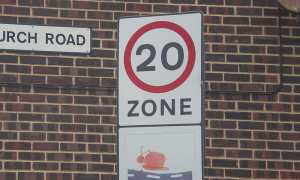
A default 20mph speed limit could be coming to Surrey’s towns and villages. Surrey County Council is developing a new speed limit policy with the aim of making streets safer and tackling climate change.

The proposed changes will a work on a presumption that most 30mph roads in urban and village settings will be reduced to 20mph.

There are on average nearly 30 deaths on Surrey’s roads each year, and a new road safety strategy will not only work to bring that number down, but also fit in with council objectives around liveable and “healthy” streets.

A meeting of the county council’s communities, environment and highways select committee on Wednesday (July 5) will look at the plans, which officers have been working on since the beginning of the year.

Council documents show that 95 per cent of pedestrians hit by cars at 20mph survive, dropping to around half at 30mph and to 5 per cent at 40mph. They also say that in 2021, 24 people were killed and 647 were seriously injured on Surrey’s roads.

A bid brought to council in 2022 to make the default speed limit 20mph in town centres and residential areas was rejected by county councillors.

The council’s cabinet member for highways and community resilience asked officers at the start of 2023 to come up with a new policy with “a clear ambition” for “more appropriate” speed limits town centres, residential areas, village centres and outside schools.

It comes as the council also considers adopting a “Vision Zero” approach, following the principle that “it is neither inevitable nor acceptable that anyone should be killed or seriously injured when travelling”.

The approach is being brought in by councils across the UK including in London, Kent, Essex, Cambridgeshire and Devon and started in Sweden in the 1990s.

A Local Transport Plan adopted by the council in July 2022 sets out plans for changes to the transport network in Surrey up to 2032 and after. Part of that plan include introduction of 20mph limits using just signs, rather than “self-enforcing” zones which would include physical traffic calming measures like speed humps.

The plans said: “There is a presumption that most existing 30mph limits will be reduced to 20mph, however, this is not appropriate for all roads.” There would still, for example, be 30mph “buffers” on the approach to towns and villages, for safe transition into and out of the 20mph limits.

Documents also said a 20mph zone would not be appropriate and higher limits would be kept where the number of pedestrians and cyclists using the road was low and would still be even with lower speeds, and where there were no need for pedestrians and cyclists to mix with motor traffic. This could include where there were segregated cycle paths, crossing points or no need for people to cross the road.

Streets likely to see speed limit reductions are those where “vulnerable road users and vehicles are expected to mix in a frequent and planned manner” including residential streets, and places where people go for shopping, leisure, socialising, business or health.

A reduction to 20mph limits also fits in with the council’s plans to create “healthy streets”, a scheme which prompted a councillor to pen a break-up letter from a street to a car earlier this year.

Organisations that have called for greater use of 20mph limits include the General Assembly of the United Nations, The World Health Organisation and The National Institute for Health and Care Excellence.

While meeting documents show that not all drivers would stick to a new 20mph limit, such schemes should result in an overall reduction in mean average speeds.

Since publication of this story on 29.06.2023, Surrey County Council has said 30.06.2023, the report has been withdrawn from the agenda for “further work to be undertaken”.

Image: Backspace289 Public Domain


Epsom family Opened to a two degree challenge

Jo and Ian Mcgleegan

Joanna McLenaghan walked quite literally in her Epsom father’s footsteps when she followed dad Ian across the stage to collect identical degrees recently at a ceremony staged by The Open University.

The pair signed up for an OU MSc in Maths in the same year and there followed six years of “total rivalry” to see who could get the best marks for assignments.

It’s the third degree for Joanna, 36, who is now a data scientist managing a team of people at Gousto, the recipe box company.

She earned a first-class degree in physics at Oxford followed by a doctorate in the same subject from the University of St Andrews. But her latest achievement was hard won by burning the midnight oil whilst working full time.

Jo, as she is also known, says her OU degree was definitely a factor in her gaining her latest job at Gousto as she says employers know the “level of effort and commitment that you have to put in, particularly doing something over six years on top of a job. Whilst I already had the undergraduate degree and a PhD, I think as an employer, when you’re looking through hundreds of applications having something like this on a CV really helps you to shine,” she said.

Ian McLenaghan, 66, from Epsom in Surrey, is full of praise for his daughter: “I’m incredibly proud of her achievements. We might have started out on the same pathway but she’s much more of a people person, who’s capable of doing things like management. “That’s something I avoided like the plague when I was working. I just wanted to go away in a cupboard somewhere and work on my own solving technical problems.”

Yet Ian is something of an academic himself. He also has an Oxford degree in physics, and in the same subject holds a doctorate from Imperial College as well as an MS from the California Institute of Technology. He began his MSc while semi-retired to “keep Alzheimer’s at bay” but also admitted “I guess we like studying”.

Jo says she clearly remembers Ian encouraging her and supporting her studies through childhood: “I always remember, before I went to high school, that my dad and I had these study sessions where he cut out these different molecules and then we’d attach them together with paper clips. And he was always buying me things like magnet sets, so he definitely encouraged me from a young age.” She says once he bought her a book on Java programming!

For Jo, her dad is an inspiration: “He’s had a lifelong love of learning that he’s been willing to pass on. He taught himself coding and computer programming and it’s that curiosity that has guided him his whole life.” She added: “I think a lot of people think you just learn when you’re a child; a teenager and then you when you go to university and then that’s it!”

The Open University (OU) is the largest academic institution in the UK and a world leader in flexible distance learning. Since it began in 1969, the OU has taught more than 2.3 million students worldwide and currently has over 208,000 students.Seventy-one per cent of directly registered students are in full-time or part-time employment, and 76 FTSE 100 companies have sponsored staff to take OU courses.

Philippa Green reporting.


Accountant’s fees in dispute

Counting money

Epsom and Ewell Borough Council‘s external audit fees, provided by Grant Thornton UK LLP, are in the region between £50,000 to £60,000 per annum for an annual budget in the region of £8.5 million. Another Surrey council with a budget in the region of £11.5 million is facing auditor fees between about £160,000 and £245,000. Emily Coady-Stemp reports:


A Surrey council will challenge its auditors over a staggering 479 per cent increase in fees for the work it did on two years of the authority’s accounts.

Standard fees for the audits, which relate to accounts for 2019/20 and 2020/21, were set at £36,000 per year. But Tandridge District Council has now been hit with a bill for additional fees totalling £345,000, a difference which officers say represents three per cent of the council’s annual budget.

Mark Hak-Sanders, the district council’s chief finance officer, told the meeting that officers were in the early stages of discussing fees with Deloitte and would undertake the first stage of challenging them.

Should they not be able to reach an agreement with the auditors, which he said was a “distinct possibility”, the challenge would be escalated to the Public Sector Audit Appointments, the body responsible for setting the standard scale fees.

Meeting documents set out the reasons for the increase in fees charged, which stood at an additional £136,000 for 2019/20’s account and an additional £209,000 for 2020/21.

Deloitte’s submission said: “The scale fee is based on assumptions about the scope and required time to complete our work, and does not reflect any additional audit issues for the year, or the increasing scope of work required due to new auditing requirements and regulatory requirements.”

Quality or preparation issues led to the largest additional fees in both years, and documents showed that compared to around 700 hours of work built in to the scale fee, the total time spent on the 2019/20 audit was around 4,600 hours and in 2020/21 around 5,800 hours.

The meeting heard that some level of variation was expected, though not as high as this, and Mr Hak-Sanders said officers would report back to the committee on the progress of the challenge.

Additional work on the audits included more detail requested by the Financial Reporting Council, new assets being bought in a year which were not included on original figures, and in one case a delay of five months for a document to be passed on to auditors by the council.

Mr Hak-Sanders said any increase in the fees should not impact on the council’s service delivery for the coming financial year but there nonetheless was a risk associated with the increase which needed to be managed. He told the meeting: “As with any risk, the council has contingency set aside to manage it and so it wouldn’t affect frontline spending decisions as such. In the long term, any money that we spend on audit is money that’s either less in reserves or less to spend on front line delivery.”

After the meeting, Mr Hak-Sanders said: “The accounts for 2019/2020 and 2020/2021 were produced before a complete transformation of financial management at Tandridge District Council.

“The transformation of the council’s finances has put us in a much stronger place to meet challenges such as reduced funding, inflation and the cost of living crisis, as well as strengthening our approach to financial reporting and accounts


Chris Grayling MP on new homes and biodiversity

Chris Grayling MP

Now that the local elections are out of the way, we all wait with interest to see what the Borough Council is planning to do about its controversial plan to build all over the green belt. I hope they will now think again.

The loss of green belt is not just about the loss of character in our area. It would also have a huge impact on local biodiversity. The loss of Horton Farm would have a knock on impact on the Common and Horton Country Park, with the loss of habitat for birds and animals which range across the whole area.

And that would come at a time when local authorities are expected to play a much more active role in the restoration of nature.

For half a century we have seen a sharp decline in native species in the UK. While a few have thrived, and nature is to blame for some of the decline – have you noticed how many more magpies there are around to empty the nests of smaller birds – the reality is that continuing development and the loss of habitat, alongside the use of pesticides, has made a huge difference.

I hope and believe that is now beginning to change. There are firm Government targets for the restoration of nature. Councils are obliged to have a Local Nature Recovery Strategy with real action plans in it. Developers will, from November, be obliged to build a plan for biodiversity net gain into their developments. That means if they take a way a habitat, they need to invest in developing another elsewhere. I hope that will narrow the cost gap between building on brownfield sites and just building on open fields.

The new system of agricultural support will also make a difference. Outside the European Union we have been free to develop an entirely different approach to supporting farmers, away from the constraints of the Common Agricultural Policy. The new UK approach will reward farmers for achieving a better balance between production and nature – for example by restoring hedgerows that were ripped out in the past, or by leaving much wider margins around fields where insects and small animals can flourish. Or by restoring the copses that so often stood in the middle of their fields, or the ponds that have so often disappeared.

In particular it will help the growing number of Nature Friendly Farmers around the country, who are taking an entirely different approach to agriculture with far fewer pesticides and by using what are called cover crops to stimulate the soil instead. Those who have already gone down this route are finding their costs fall, and often their profitability rises while they produce the same amount or even more food. A combination of more traditional methods with modern technology is really making a difference.

But in an area like ours where farming is only present on a limited scale, the importance of the open spaces as corridors through which animals can pass is of particular importance. From the borders of London in West Ewell to the M25, and across to the far side of the Downs and beyond, there are wide areas where local wildlife can roam. Deer in particular are thriving locally. You can often see them grazing in the fields between Epsom and Ashtead in the early evening.

We do need new homes. But we cannot just build at the expense of biodiversity. And in an area like ours, where there is an alternative to the Council’s controversial plan, we would be crazy not to take a different route.


Surrey’s worst road to be improved

Dorking to Reigate map

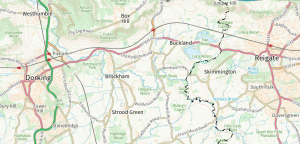
A £1.8million scheme to improve a Surrey A-road branded “one of the worst in the country” has moved to its next stage. Councillors at Surrey County Council’s cabinet highlighted the “frightening statistics” on the A25 between Dorking and Reigate, which saw 70 collisions resulting in injury between 2017 and 2022.

The stretch of road, just over files miles long, has been named by The Road Safety Foundation as one of the worst A roads in England for the number of fatal and serious injuries per vehicle kilometre travelled.

Thanks to a £1.8 million grant from the Department for Transport, Surrey County Council’s cabinet agreed at a meeting on Tuesday (June 27) to progress works and make changes to the road to reduce the risk of collisions resulting in injury.

The decision means work will begin on the next phase of projects as part of the Surrey Infrastructure Plan for road improvements across the county. The projects will now have a full business case developed and reported to the council’s Capital Programme Panel before they formally start.

From 2017 to the end of November 2022 there were 70 collisions on the road, one of them a fatality and 22 resulting in serious injuries. Meeting documents show there were 26 (37 per cent) involving injury to motorcyclists and 17 (24 per cent) where pedal cyclists were injured.

The reasons given for this were the nearby Rykas Café and Box Hill, both popular spots for those on two wheels, and that the road was the main east to west route through Surrey.

Cabinet member for transport, infrastructure and growth, Councillor Matt Furniss (Conservative, Shalford) told the meeting the risk of collisions was “significantly high” on this route. He said as well as reducing the risk of collisions, there could be segregated cycle lanes and other active travel measures introduced.

Cabinet member for highways and community resilience, Cllr Kevin Deanus (Conservative, Waverley Eastern Villages), said the “frightening” figures about injuries on the road reiterated the “absolute need” for the project.

While Cllr Rebecca Paul (Conservative, Tadworth, Walton & Kingswood), the council’s deputy cabinet member for levelling up, said it was “key” that local residents were engaged and consulted with to make sure there was community support for any changes made.


ULEZ driving old cars to Epsom market

Wilsons car dealer Kiln Lane Epsom

Epsom has the highest number of second-hand cars for sale per 10,000 people, followed by Winsford and Preston. Hatchbacks are the most common type of second-hand car, accounting for 38% of all listings. The Ford Fiesta, VW Golf and the Ford Focus are the most common second-hand car models.

New research reveals the UK towns and cities with the highest number of second-hand cars for sale.

The research, commissioned by car finance refund experts Undisclosed.co.uk, looked at more than 400,000 used car listings from AutoTrader, in order to find the areas of the UK with the highest number of second-hand cars per 10,000 people.

With The Mayor of London’s Ultra Low Emission Zone expanding to Epsom and Ewell‘s London Borough borders with Sutton and Kingston many local residents are changing cars to avoid the charge.

Comfortably in first place, with 549 second-hand cars listings per 10,000 residents, is Epsom. The Surrey town sits at the top of the list, cementing itself as the second-hand car capital of the UK. The data shows that there are 1,729 second-hand cars for sale in Epsom.

With 498 second-hand cars for sale per 10,000 residents, Winsford is close behind in second place. The data shows that the Cheshire town boasts 1,699 second-hand cars for sale.

In third place, is the Lancashire city of Preston, with 348 second-hand cars for sale per 10,000 residents. The first city to appear on the list, Preston has a total of 3,955 second-hand cars for sale.

Fourth place belongs to Peterborough, with 318 second-hand cars for sale per 10,000 residents, and ranking in fifth place with 294 is Stirling.

The remainder of the top ten features Wakefield in sixth place (253), Oldham in seventh place (236), Canterbury in eighth place (234), Blackburn in ninth (231).

Rounding off the list in tenth place is Stafford, with 227 second-hand cars listings per 10,000 residents.

Hatchbacks were found to be the most common type of used car, accounting for 38% of all listings (164,910 listings), while SUVs were the second most popular, accounting for 33% of listings (143,842 listings).

A spokesperson for Undisclosed.co.uk commented on the findings, saying:

“This research offers valuable insight into the areas of the UK which see a disproportionately high number people trying to sell off their vehicles. The more saturated the second hand car market is in a given area, the more tricky is to be to sell, with many potential buyers being less willing to travel further afield in order to secure a slightly better deal.”

Related reports:

Can you beat the ULEZ charge?

Challenge to ULEZ gaining grounds

Many Surrey motorists will be paying the ULEZ charge.

Surrey Council’s ULEZ talks ongoing with TfL

Image: Wilsons car dealers in Kiln Lane Epsom. One of the country’s largest second-hand forecourts.


A Midsummer’s Night’s Dream in Cheam

Epsom Choral Society summer concert 2023

Epsom Choral Society gave us a night to remember at St Andrews Church in Cheam last Saturday. Their programme was an unusual and attractive coupling of works by Constant Lambert and David Fanshawe.  In The Rio Grande, Lambert sets a poem by Sacheverell Sitwell for choir, two pianos and percussion, while in African Sanctus, written following visits to Africa in 1969, Fanshawe combines African sounds, both human and natural, with live musicians and a Latin Mass.

The concert got off to rousing start with the choir in fine voice, with plenty of rhythmic verve and effective dynamic contrasts throughout. It’s worth remembering, however, that in very soft passages articulation needs to be even crisper. I did also wonder whether there might have been slightly more sway and swagger in phrases such as “… they dance in the city, down the public squares…”. These are minor quibbles; the performance was as accomplished as one might expect.

Marion Lea, the choir’s regular accompanist, took the solo piano role, with its virtuosic cadenzas, while Peter Jaekel, a regular visitor, took the ‘orchestral’ part. Both pianists dealt expertly with the technical demands, and they displayed an excellent rapport. This was also apparent as two pianos became one for the three lollipops from Walton’s Façade suite, namely Polka, Popular Song and Foxtrot, hugely enjoyed by the sizeable audience. The first half ended with a brief introduction to African Sanctus by the late composer’s widow Jane Fanshawe. During her very informative words and photographs, conductor Julian Collings was presented with one of David Fanshawe’s trademark caps.

The second half of the concert was heralded by a mighty roar of “Sanctus” from the choir, accompanied by a full percussion ensemble. Having conducted this work myself many moons ago, I recall just how tricky it was to get all elements perfectly aligned – I wish I had had professional sound engineers such as the excellent team on Saturday!  A mesmerising muezzin’s call to prayer got the next movement under way. Here the gorgeous blend of the voices produced some exquisite singing with perfect intonation. Other qualities such as stamina and staying power presented themselves in the next two movements. The call of the muezzin translates into the key of D, and as any soprano will tell you a very high D lies well out of the comfort zone so full marks to the sopranos here.

Following the Credo came Love Song, a tender and moving episode in which a cattle boy in East Sudan sings about a girl called Abdha. At the start of the movement, we hear a recording of a mother ringing tiny bells outside her tent in an ancient custom signifying the birth of a baby son. In the context of the mass this signifies the birth of Jesus Christ, and as the sound of the bells gently faded the effect was intensely poignant.

The Crucifixus is described by the composer as the “heart of the work” and it features a fearsome mix of war cries, rainstorms and dances, resulting in a dramatic and menacing texture. I wondered for a moment whether the percussion was slightly overpowering here – the war cries from South Sudan, for example, were not easily picked out. A belated mention here of the excellent soprano soloist, Lisa Swayne, who managed the wide jagged leaps with great style and aplomb.

The gentle Lord’s Prayer which followed drew a lovely gospel feel to the singing, although I did feel that the lead guitar was slightly over-amplified.  After a movement of chants and a superbly effective Agnus Dei – with the soloist once again shining in her three consecutive cries of Jesu Christe – a thrilling, exhilarating and exuberant finale brought this unique work to a close. Rapturous applause followed, leading to an encore – a repeat of the Lord’s Prayer – during which Julian Collings, fittingly I thought, wore the cap presented to him earlier.

Martin Seath

Related Reports:

Epsom choristers go south for the Summer

Epsom Choral Society opens its centenary celebration 2022

Photo credit: Clive Richardson


Surrey splashing out

Yvonne Arnaud Theatre Guildford

Making a Claygate outdoor swimming pool an all year round indoor facility is one of many projects supported by Surrey County Council’s Community Fund. Since November 2020 the Fund has splashed out over £10 million. This year sees a commitment of £2.9 million to Surrey’s premier theatre, The Yvonne Arnaud in Guildford.

The money will be used to improve the accessibility of the entire theatre and ensure existing and new community spaces be accessible for a variety of new groups, building on the community initiatives and outreach programmes already delivered by the theatre.

Joanna Read, Theatre Director and Chief Executive of Yvonne Arnaud said: “By making this award Surrey County Council is recognising the value the people of Surrey place upon the Yvonne Arnaud and its’ integral role as an arts provider across the county. This funding will help make the theatre accessible, sustainable and fit for purpose, better able to serve Surrey for future generations.

“The Arts play a critical role in supporting our health and wellbeing and building cohesive communities. It’s good to have the backing of our County Council as we continue our work bringing excellent theatre and arts engagement to the people of Surrey. Our vision for the Arnaud maintains its theatre traditions while building on our creative heart; repurposing a 1960’s building to deliver multi-faceted offerings for 21st century audiences.”

Surrey County Council Deputy Leader and Cabinet Member for Communities and Community Safety Denise Turner-Stewart said: “This is a truly ambitious project to develop Guildford’s iconic and much-loved building into a friendly, cultural community hub and is exactly the sort of project which offers a wider community benefit.

“Surrey’s cultural offer caters for all ages and budgets.  It is an important part of what makes the county a great place to live, work and visit. I would like to congratulate Yvonne Arnaud who have been successful in their application to Your Fund Surrey.

“Improving accessibility will enable Yvonne Arnaud to build on its existing excellent reputation and become a place everyone can enjoy.”

Master Park Pavilion in Oxted, another recent successful applicant to Your Fund Surrey Large Community Project Fund, will receive £1.86m towards replacing the current building with a new fit-for-purpose two-storey community and sports hub.

The Park Hub, set in the 11-acre park will become a valuable resource for the whole community with new facilities including a café, rooms for classes and community activities, improved changing facilities and accessible toilets.

Pammy McNaughton, Chair of Master Park said: “We will be forever grateful to Your Fund Surrey for helping Master Park towards this goal. We knew that our request for £1.86 million was a large sum, but by granting us this amount, not only will Your Fund Surrey be helping Master Park Charity, but they will also be helping the many other charities, activities, clubs, and communities that we are engaged with.”

Other projects awarded funding via Your Fund Surrey so far include:

Claygate Community Pool, £363,500 to develop an existing outdoor pool into an indoor facility that will enable the whole community to use the pool all year round.

Leatherhead & Dorking Gymnastics Club, £550,000 to extend the current facilities and build a new gymnasium and sensory room.

Normandy Community Shop and Café, £570,189 towards building a new community shop and café at Manor Fruit Farm

Ripley Village Hall, £645,036 towards rebuilding of the Village Hall, including accessible community rooms and a new kitchen.

South Park Sports Association, £150,000 towards the construction and installation of a 3G artificial grass pitch with a spectator area.

Tatsfield Parish Council, £10,146 to install new picnic benches and planters on the village green.

Weybridge Men’s Shed, £30,000 towards the internal fit-out of two sheds and the installation of an underground water treatment system.

Communities can submit applications via the Your Fund Surrey website for both small and large scale community projects and have their say on projects being proposed in their local area www.surreycc.gov.uk/yourfund.


Mole Valley Plan Paused

Mole Valley District Council office.

As Epsom and Ewell’s Draft Local Plan’s progress awaits a new timetable we take a look at what’s happening in neighbouring Mole Valley. Chris Caulfield reports.

The decision on where, and how many, houses will be built in Mole Valley has been paused, again. It means the council’s local plan will almost certainly be delayed, the planning inspector said.

Mole Valley District Council was originally given permission to delay the publication of its local plan until after the May 2023 elections and  to give it time to understand any Government revisions to the National Planning Policy Framework (NPPF) which had been due for publication in the spring.

The deadline passed and the elections are over however the Government has still to finalise and publish the NPPF.

Writing to Mole Valley District Council, the Planning Inspectorate said that  “Given the council’s position”, that changes to the NPPF  “may have implications for its plan, and that the final NPPF changes are yet unknown, it seems reasonable to agree to the council’s request (to pause the local plan). The extended pause will enable the council to fully consider the implications of any revised national policy.”

Councils waiting for the NPPF update have been told they will not be treated as having out-of-date local plans.

The inspectorate’s decision was welcomed by the council’s cabinet member for planning, Councillor Margaret Cooksay. She said “The Inspector has again recognised that delays in the Government adopting a revised National Planning Policy Framework (NPPF) – which may include important changes for Mole Valley’s draft Local Plan – has created ongoing uncertainty for us as the local planning authority.

“In her most recent response to us, she emphasised that she does not want the examination of our draft Local Plan to become ‘unduly protracted’. We could not agree more, and we urge the decision-makers in government to publish the new NPPF quickly so that clarity concerning the impact potential changes could have on our Plan is achieved as soon as possible.

“Whilst we would of course rather not delay further, we know that this is the right thing to do to get the right plan. We will bring you any future updates concerning the Plan via our normal publicity channels as soon as they are made known to us.”

Related Reports:

Mole Valley Local Plan paused: official

Lessons for Epsom in Mole Valley’s “shouty” Local Plan struggle?

How Green is My Mole Valley?

Pause for thought on paused Plan (Epsom and Ewell)
Image: Mole Valley District Council. CC Surrey Advertiser.


Multi-million pound transformation for Surrey libraries

Epsom Library

A multi-million investment into Surrey’s libraries has been approved by Surrey County Council’s
Cabinet to modernise services and create flexible, innovative and inclusive spaces that best meet the
needs of our residents. This will revolutionise our libraries offer and make them fit for the future.

The first phase of this work will focus on key libraries including Epsom, Redhill, Staines, Woking and
Weybridge with completion expected by the end of 2024.

The work is part of a library strategy focused on ensuring that Surrey libraries deliver a service that is fit for the future and accessible to all. The plans include significant changes at each location, including the creation of community ‘Hubs’ in Staines and Weybridge.

For Epsom, Woking and Redhill this means the creation of flagship facilities that will include:

 Flexible meeting rooms with kitchenette 
 Moveable partitions/walls to create agile workspaces
 Meeting pods
 New furniture  
 A fully flexible layout throughout with space for events and performances, exhibitions, partner organisations and community use.

Community Infrastructure Levy (CIL) funding of £500k has been secured for Redhill Library from
Reigate and Banstead Borough Council.
                                                                                    
For Staines, this will include:

 Creation of a state-of-the-art flagship modern Library and Cultural Centre
 Relocation to the former Decathlon store located in the Elmsleigh shopping centre
 The new hub will include Citizens Advice, Voluntary Action, Spelthorne Museum and other lettable space.
 Integration of Spelthorne Museum into the layout of the library will create an enhanced resident experience
 External branding to windows and brickwork and landscaping to outside area

For Weybridge, this will include:

 Extending the ground floor library space
 Improving the current spaces and facilities to better serve the building’s current occupiers such as Brooklands Radio and create a space for other partner organisation to deliver additional essential services
 External upgrade to improve the look of the building
 The refurbishment will also reduce energy use and carbon emissions, contributing to the Council’s net zero ambitions
 A fully flexible layout throughout with space for events and performances, exhibitions, partner organisations and community use.

Denise Turner-Stewart, Deputy Leader and Cabinet Member for Communities and Community Safety at Surrey County Council, said: “It’s fantastic to be able to invest in our libraries and create cultural and community hubs so they are better placed to serve Surrey’s residents. The improvements will provide the opportunity to redesign and refurbish some of our key libraries, providing updated, attractive and inviting places where people can read, socialise, study and relax. This work is all about making sure Surrey’s libraries are all vibrant hubs, providing warm, friendly spaces where everyone is welcome.”

Cllr Clive Woodbridge, Chair of the Community & Wellbeing Committee at Epsom & Ewell Council,
said: “It is fantastic news that our much-loved library in Epsom is going to receive this investment. Our libraries are a vital resource for so many of the borough’s residents, and ensuring that Epsom Library is fit for the future and accessible to all will mean our communities can benefit from all it has to offer for years to come.” 

The development of the libraries follows on from the approval of the 2019 Library and Cultural Services Strategy and is closely aligned with the Surrey 2030 Community Vision and the Hubs programme, which looks to deliver services in a joined-up way allowing residents to access multiple services in one location and support the council’s ultimate ambition – that no one is left behind.

To find out more about libraries in Surrey visit the Surrey Libraries web pages:

https://www.surreycc.gov.uk/libraries


Meet Epsom & Ewell’s new Mayor, Robert Geleit.

Robert Geleit Epsom and Ewell Mayor 2023-2024

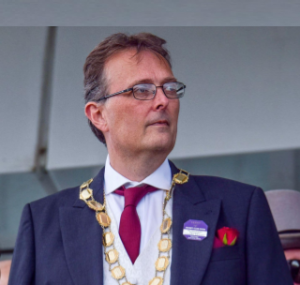
Epsom and Ewell Times welcomes the new Mayor. Labour Councillor for Court Ward, Robert Geleit.

EET: The main thing I wanted to discuss was charities, I see that you are championing three charities in your Mayoral year, could you expand upon why you chose those particular charities?

Robert Geleit: I chose to champion these three charities because I want to help make sure each one of them receives sufficient funds to be able to carry on what they are doing so they can continue positively impacting our community.

Age Concern Epsom and Ewell was an easy choice because of the essential services they offer our pensioners: practical support, help in accessing services and opportunities to increase quality of life.

Citizens Advice Epsom and Ewell have faithfully continued to offer desperately needed advice services in the Borough. I have seen personally the impact it has had in Court Ward as volunteers advise people how to access benefits they qualify for, how to best seek employment, how to deal with money and credit issues, their consumer rights, immigration issues and how best to tackle relational issues with neighbours or family (or anyone else). Often people don’t know where to start when it comes to tackling these things and CAEE is a wonderful resource.

Last, how could I not support Love Me Love My Mind? They are a small local charity offering support to those in our community with mental health difficulties, including providing information, offering depression support groups and a drop-in group that offers a weekly meal and all sorts of social and educational opportunities. I have suffered with mental health problems myself, so mental health support is near and dear to my heart.

EET: Next question I wanted to ask was what are your priorities for your year in office?

Robert Geleit: I so enjoyed my year as Deputy Mayor and I’m enjoying being Mayor even more. I want to work hard serving the borough and have fun! I intend to be promoting the ward I represent as Councillor, Court Ward, since it has a lot to offer. And I really want to offer young people in Epsom something to do that builds and grows positive community. Watch this space!

EET: What do you think could be improved about the Borough?

Robert Geleit: Youth provision. When I was growing up on the Longmead Estate in the eighties there were all number of offerings for us. I remember the Ace Disco in particular. Now there is so little offered for our youth. This needs to change. There must be more we can do.

EET: What are you most looking forward to in your new role?

Robert Geleit: I’m really looking forward to Armistice day. Last year I had the privilege of laying a wreath at St Martins and found it really moving. This year, to have the opportunity as Mayor to lay a wreath at St Mary’s in Ewell is going to be a once in a lifetime opportunity.

EET: If you were just named Fulham’s manager, who is the first player you would sign?

Robert Geleit: I really don’t follow sport. But, like my father who was a lifelong Fulham supporter, I do go to Craven Cottage on the odd occasion. If I had to sign a player I think I’d sign up my mate Dodgy to play in goal for Chelsea just before they played Fulham – then he could be Fulham’s secret weapon as he let in loads of goals!

EET: What hobbies of yours might suffer during your busy Mayoral year?

Robert Geleit: So much of my spare time has been spent on being a good Councillor (or Mayor!) that I don’t have much time for hobbies. However, in the past I tended to flip between working on hardware and software projects. Sometimes I still manage to find the time for the odd bit of soldering. My main passion is working with old fashioned valves to create sublime sound systems – I could actually make a living out of it but I’m saving that for if I ever lose my seat 🙂

EET: Thank you very much Mr Mayor. We hope you enjoy your year in office.

Related Reports:

Epsom and Ewell’s 7th Labour Mayor?

Meet Epsom & Ewell’s new Mayor, Clive Woodbridge. (2022-2023

Image: Robert Geleit at the Epsom Derby Races June 2023.


Surrey Council ‘blamed me as a parent’ after asking for help

Surrey County Council HQ

A mother of an (Special Educational Needs) SEN child claims Surrey County Council “blamed her” as a parent after she asked for help and support, according to a local government watchdog report.

The revelation came in reports published this month by the Local Government and Social Care Ombudsman, which also found the authority’s failings caused a second child to miss suitable education for a year, and that a boy had to be held back a year after it failed to identify his special educational needs.

The three cases meant the county council had to pay out a total of £4,900 to the aggrieved families. Surrey County Council said it apologises for the distress it has caused and has put in “robust” auditing measures to learn from its mistakes.

The first case dates back to April 2021 when a mother, referred to as Mrs X raised a complaint about the lack of support the council offered her as well as the actions of two social workers. She said the council failed to offer help , including respite to her and her child. She also said the council  blamed her as a parent and recorded false information about her in the social care records. 

The ombudsman said there was “fault in the council’s actions” but that the local authority had already remedied the injustice  when it offered her £100 for its delay and £400 to recognise the distress. He did not take the matter further.

The council’s costliest error came after a father complained that his son was not receiving full-time education between April 2021 to March 2022. The council’s lack of action, the ombudsman found, was because it “simply overlooked” key information resulting in the boy missing out on education, causing the family distress and uncertainty.

The ombudsman found Surrey County Council at fault and recommended it apologise for the harm done as well as pay £200 for the time and trouble, £300 for distress and £2,200 for missed education and SEN provision.

The final finding against the council involved its delays in identifying a boy’s special educational needs and finding an appropriate school for him. The delay meant he missed eight months of education and was held back a year. It resulted in the ombudsman ordering the council to apologise to the mother and child for the distress caused by its failure to provide the boy with an appropriate education.

Surrey was also told to pay the mother £1,500 as a symbolic gesture to recognise the distress and impact on the youngster’s wellbeing and personal development.  It must also pay the mother £200 for the frustration and distress caused to her.

Surrey County Council’s cabinet member for education and learning, Councillor Clare Curran said they took ombudsman findings very seriously and apologised for the distress caused. She said: “I am aware that the council has not always got things right and that the support and service that we give some children with additional needs and their families is not always of the standard that we would expect and I am sorry about that. We are working hard to improve our services.”

Cllr Curran said they had put in a programme of ongoing professional development for education staff  as well as what she described as a “robust audit system”. She said: “All SEN case officers are required to attend Education Health and Care Plan (EHCP) writing training, which clearly sets out the local authority’s duties, and additional guidance has been written for staff to reiterate these duties.

“Further bespoke training around writing EHCPs will be delivered and be a requirement for all SEN staff when joining Surrey. We also recognise the significant issues that confront the SEND system nationally. We have seen a 64 per cent  increase in education, health and care needs assessment requests across Surrey since 2020, at a time of a national shortage of Educational Psychologists (EPs). 

“We are doing our utmost to recruit more to meet this demand, and we are filling this gap as best we can, but we hope to see the shortage in trained EPs and other issues addressed soon through the government’s improvement plan. We remain committed to improving our services and outcomes for children with additional needs so that they are happy, healthy, safe and confident about their future.”

Related reports:

Council pays £3,900 to mother of SEND child

Surrey County failed SEND boy

Surrey to SEND £40m for special schools